
Everyone loves the idea of a leader who “has it all figured out.” I’ll admit, I used to chase that image myself, thinking certainty and confidence were the markers of real leadership. But here’s the uncomfortable truth: in today’s world, that leader is already outdated. The best leaders I know, the ones who build resilient teams and future-proof companies, are in permanent beta mode. They’re leading, yes, but they’re also learning, stumbling, iterating, and adapting, often in public, and often imperfectly.
My Current Chapter: Learning on the Job, Every Day
Right now, I’m living this out in real time. I’m in a new role, with a new team, at a new company. The technology domain is unfamiliar, the new fiscal year has just started, a global sales kickoff is looming, and there’s a whirlwind of international meetings — all layered on top of my ongoing life commitments.
Some days, I feel energized by the challenge. Other days, I feel exposed. I have to make decisions without all the data, lead people who know more than I do in certain areas and ask questions that reveal my learning curve. It’s both exhilarating and humbling, and sometimes, honestly, a little scary.
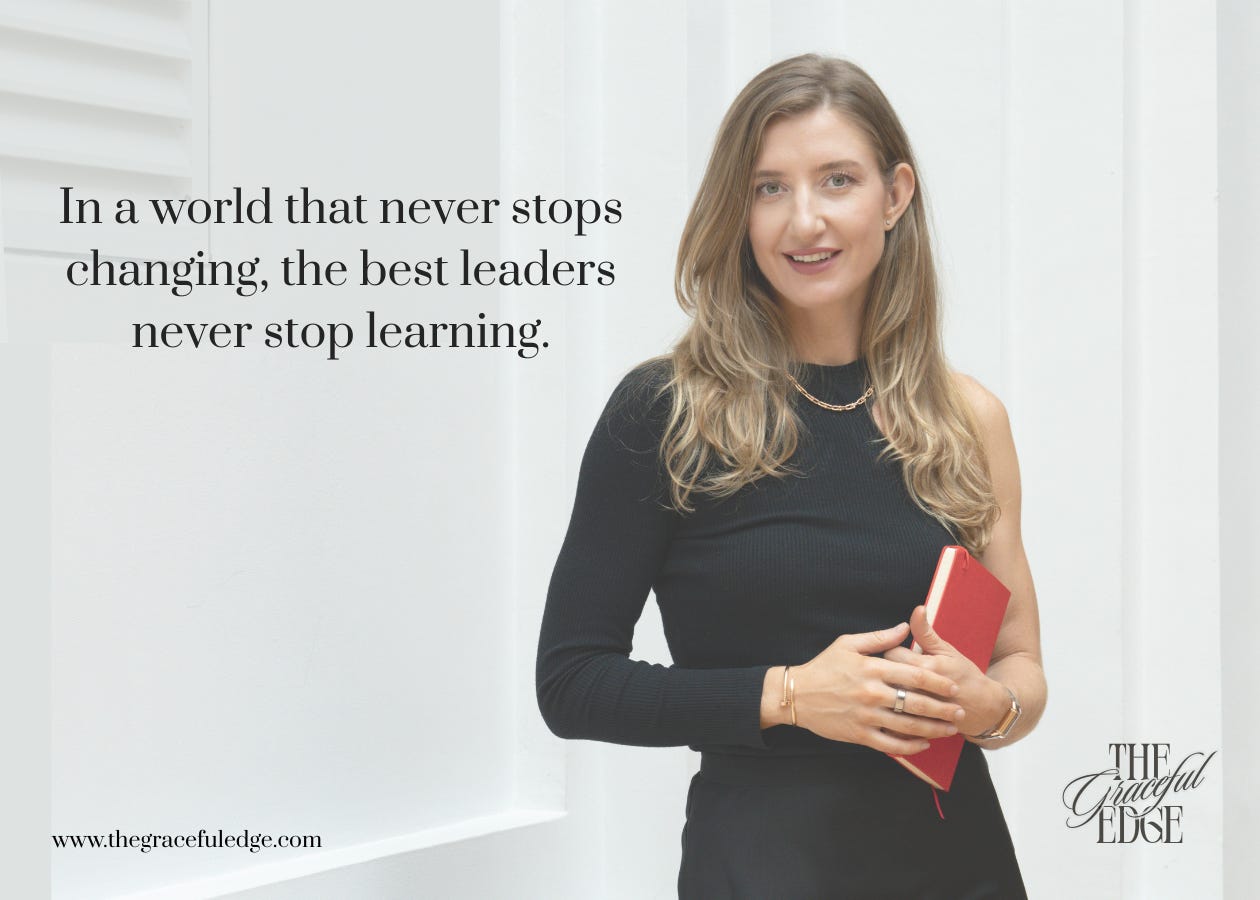
The Temptation to Hide (and Why I Don’t)
In moments like this, the easy trap is to push learning to the sidelines, to tell yourself you’ll “catch up later” when things calm down. But I’ve learned that these chaotic periods are actually the richest for growth, if you know how to stay both an effective leader and an active learner.
It’s not just me saying this. Harvard Business Review calls this leader-as-learner mindset the “double helix” of modern leadership where authority and curiosity twist together. McKinsey data shows that organizations led by leaders who role-model continuous learning are 2.4x more likely to be high-performing. And yet, many leaders still fear showing vulnerability, worried it will be mistaken for weakness.
Here’s the rub: in most companies, confidence still gets rewarded over curiosity. Many leaders fake certainty to avoid scrutiny. But in an age where AI, market shifts, and geopolitical uncertainty can rewrite the rules overnight, clinging to the illusion of “knowing it all” feels more and more like leadership malpractice.
What I’m Practicing
I’m not perfect at this, but here are a few things I keep coming back to:
Ask the “dumb” question first. It gives your team permission to do the same. I used to hide my questions. Now, I lead with them.
Debrief in real time. After every high-stakes meeting, workshop, or trip, I jot down what worked, what flopped, and what I’ll change next time.
Show the iteration. I let people see how my thinking evolves as new information comes in. It’s messy, but it’s real.
Flip expertise upside down. I put subject-matter experts in the driver’s seat and take the learner’s chair.
Protect the pause. I carve out time to process insights before rushing to action—even if it’s just a quiet walk or a few minutes of notes.
Tips for Leading While Learning
Here’s what I’m learning about how to make this work, and how you can apply it too:
1. Make Your Calendar Your Curriculum
Your schedule isn’t just a list of obligations, it’s a real-time learning plan. Every meeting, conversation, and decision point is a chance to learn something new about your business, your team, and yourself. I started writing down one insight a day from what’s already in my calendar. Some days, the lesson is big; other days, it’s just a small note to self. Over time, it adds up.
2. Shift from “Knowing” to “Noticing”
As leaders, we’re conditioned to have answers. But learning requires curiosity. I try to go into meetings, especially with new stakeholders, with a “notice first, solve later” mindset. When I’m truly present and just observe, I notice patterns, undercurrents, and opportunities that I’d miss if I was busy proving myself.
3. Use Intensity to Test Your Leadership Habits
When the pace picks up, your default leadership habits show up fast, the good and the bad. For me, these moments are a stress test: How do I delegate? How do I make decisions under uncertainty? Am I really modeling the work-life balance I tell my teams is important? Sometimes the answer is yes. Sometimes, it’s a wake-up call.
4. Close the Loop
Learning without reflection is just noise. Every Sunday, I set aside fifteen minutes to ask myself: What did I learn this week? What would I do differently next time? This small ritual turns chaos into progress and reminds me that growth doesn’t have to be loud to be real.
Why This Matters (And the Unexpected Payoff)
Leadership and learning aren’t two different jobs. The best leaders are in a constant cycle of applying, observing, and adapting, especially in high-intensity seasons. The trick is to treat your current reality as the classroom, and your leadership as the subject you’re studying.
The leaders who will thrive in the next decade aren’t the ones with the most answers. They’re the ones who can navigate ambiguity without losing their edge, their energy, or their humanity. Leading while learning isn’t a weakness. It’s the ultimate competitive advantage.
And here’s the unexpected benefit: when your team sees you learning in real time, they don’t just follow you, they learn with you. That’s how you build not just a high-performing team, but a resilient one. And these days, that might be the most important edge of all.
Your reflection moment: What’s the skill, insight, or change you know you need to work on, but keep putting off because things feel too busy? And what would happen if you started this week—in the middle of the chaos—instead of waiting for the “right time”?
Practical Takeaways
Write down one insight or learning from your day, no matter how small.
Start meetings with a question, not an answer.
Take 15 minutes each week to reflect on what’s working, what isn’t, and what you’re learning.
Let your team see your learning process; it gives them permission to do the same.
If this message resonates with you, I invite you to share it with someone who’s also navigating the shifting tides of leadership. The more conscious leaders we awaken, the better prepared we’ll be for what’s coming.
And if you haven’t yet, subscribe to receive these reflections directly in your inbox each one crafted to inspire, challenge, and guide you through the future we’re building together.