
Two months into my new role at Cisco, I did something I hadn’t done in a while — I ran a full panel of blood work. The results surprised me, but not in the best way. My cortisol, the body’s primary stress hormone, was significantly elevated.
Here’s the irony, I felt fine. I was energized, sleeping well, and emotionally calm. But my body told another story.
And that’s the lesson. Stress doesn’t always show up as tension or fatigue. Sometimes it hides, quietly shifting your hormones, your weight, your immune response, until one day it demands attention.
For leaders and ambitious professionals, cortisol is often the silent saboteur.
Why Leaders are Prone to High Cortisol
Cortisol itself isn’t bad, in fact, it’s essential. It wakes us up in the morning, fuels alertness, and helps us adapt to challenges. But in excess or imbalance, it becomes destructive.
Ambitious leaders are particularly vulnerable because of:
Chronic nervous system activation. Constant travel, irregular sleep, and back-to-back meetings keep us in a “switched on” state.
Emotional load. Carrying responsibility for teams, customers, and results creates an invisible weight.
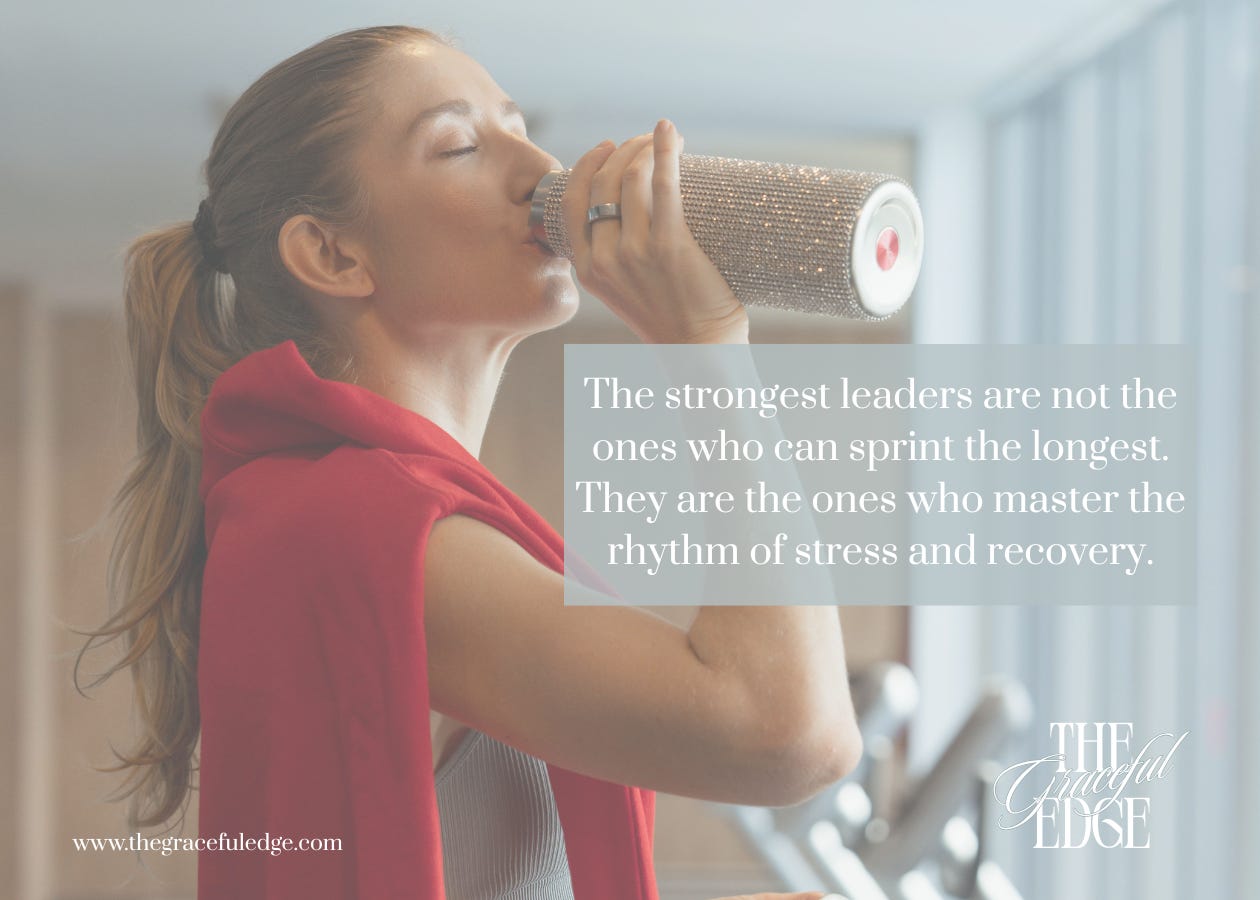
Drive without recovery. We sprint from goal to goal but forget that energy is a renewable resource, it requires conscious replenishment.
The interesting thing is that the very traits that make us successful — caring deeply, pushing hard, taking ownership — are also the traits that elevate cortisol.
My Wake-Up Call
Beyond cortisol, my blood work revealed deficiencies in magnesium, selenium, and omega-3 index. Each plays a direct role in stress regulation:
Magnesium calms the nervous system and supports over 300 enzymatic reactions — including those that regulate cortisol.
Selenium supports thyroid health, which in turn influences cortisol balance.
Omega-3s reduce inflammation and improve stress resilience at the cellular level.
Despite taking magnesium glycinate, I learned that type and absorption matter. A broad-spectrum magnesium blend may be more effective. And I had ignored omega-3s for years, a mistake now corrected.
The point is that without testing, I would never have known. I would have kept “feeling fine” while my body silently accumulated risk.
This is the trap for many high performers. You don’t notice the cortisol creep. You adapt to the demands. You normalize the pressure. Until one day, it catches up. Burnout, sudden illness, or performance decline don’t come from nowhere, they come from months or years of elevated cortisol.
Practical Ways to Balance Cortisol
Based on science and my own plan with a holistic health professional, here are practical, underutilized strategies:
Test, Don’t Guess
Run blood work or saliva testing. Don’t assume your stress is “manageable” just because you feel okay.Mineral & Fatty Acid Support
Magnesium. Consider multi-form blends (glycinate, malate, threonate) for better absorption.
Selenium. Often overlooked, but vital for thyroid and adrenal health.
Omega-3. Prioritize high-quality fish oil (check lab tests for toxic heavy metals) or algae oil with high EPA/DHA content.
Circadian Alignment
Morning sunlight exposure to anchor cortisol rhythm.
Avoid late-night blue light and stimulation to prevent evening cortisol spikes.
Stress-Release Practices
NSDR (Non-Sleep Deep Rest) or yoga nidra are proven to reduce cortisol within minutes.
Breathwork. Slow exhales (2x longer than inhales) directly calm the vagus nerve.
Movement, not just workouts. Over-exercising can spike cortisol; balance with walks, stretching, or low-intensity activity.
Nutrition Hacks
Stabilize blood sugar with protein-rich breakfasts.
Limit caffeine, especially after 2 p.m. (caffeine prolongs cortisol elevation).
Hydrate with electrolytes. Dehydration is a hidden stressor.
Shift the Mental Filter
Cortisol spikes when you live in constant “threat detection.” Replace expectation with appreciation. Gratitude practices lower cortisol measurably and help you rewire perception from scarcity to sufficiency.
Why This Matters for Leaders Beyond Health
At its core, cortisol is an energy hormone. When regulated, it fuels clarity, drive, performance, and creativity. When dysregulated, it creates false highs, deep crashes, and eventual burnout.
It’s not just about feeling “tired,” it’s about leading from a compromised nervous system. The work we do to stabilise our biochemistry is the same work that sustains sustainable leadership.
For leaders this matters because cortisol doesn’t only erode health, it erodes judgement, creativity, and the capacity to lead with presence. You can still “perform.” You may even outperform in the short run. But you’re borrowing time and vitality from your future self.
For me, this journey is just beginning. I’ll retest in 2-3 months and see how the interventions shift my numbers. But one thing is already clear: stress management is not optional, it’s leadership hygiene.
If you’re ambitious, driven, and constantly “on,” don’t wait until symptoms appear. Check your cortisol levels. Build a stress recovery plan. Rebalance before the body forces you to. Because in the end, leadership isn’t just about performance today. It’s about having the health, energy, and clarity to keep leading tomorrow.
If you found these insights valuable, please share this article with your network.
For more strategies on growth, leadership, and innovation, subscribe to my weekly letter, The Graceful Edge, where ambitious leaders gain a competitive advantage.