
The performance appraisal cycle wrapped up this week.
If you’ve ever sat in that chair, you know the weight of it. These sessions are rarely just about KPIs; they are the raw, unfiltered exchange of human energy. As a high empath, I don’t just hear the words, I feel the vibration of the room. I feel the guard people put up and the underlying tremor of “Am I enough?” Some of these conversations turned into something closer to therapy than a corporate review.
As I closed my laptop on Friday, a realization hit me. For a long time, I thought the tension of leadership was about personality, choosing between being kind or being strong, between being liked or being respected.
Now I see it differently. It is a question of emotional load.
The Unspoken Question: Who Carries the Discomfort?
Every decision and every piece of honest feedback creates discomfort somewhere—friction, disappointment, or self-doubt. That emotional response doesn’t vanish; it has to be carried.
Earlier in my career, I carried most of it myself. I buffered reality for others. I softened, reframed, and reassured. I thought I was being empathetic. In truth, I was absorbing emotional weight on behalf of the system. I was taking on “emotional debt” so my team didn’t have to feel the sting of reality.
But “niceness” without clarity often means someone else pays the price later—usually the high performers, the organizational culture, or the leader’s own health.
Protecting Feelings vs. Protecting Careers
During this review cycle, I sat with a question that I believe every leader needs to answer:
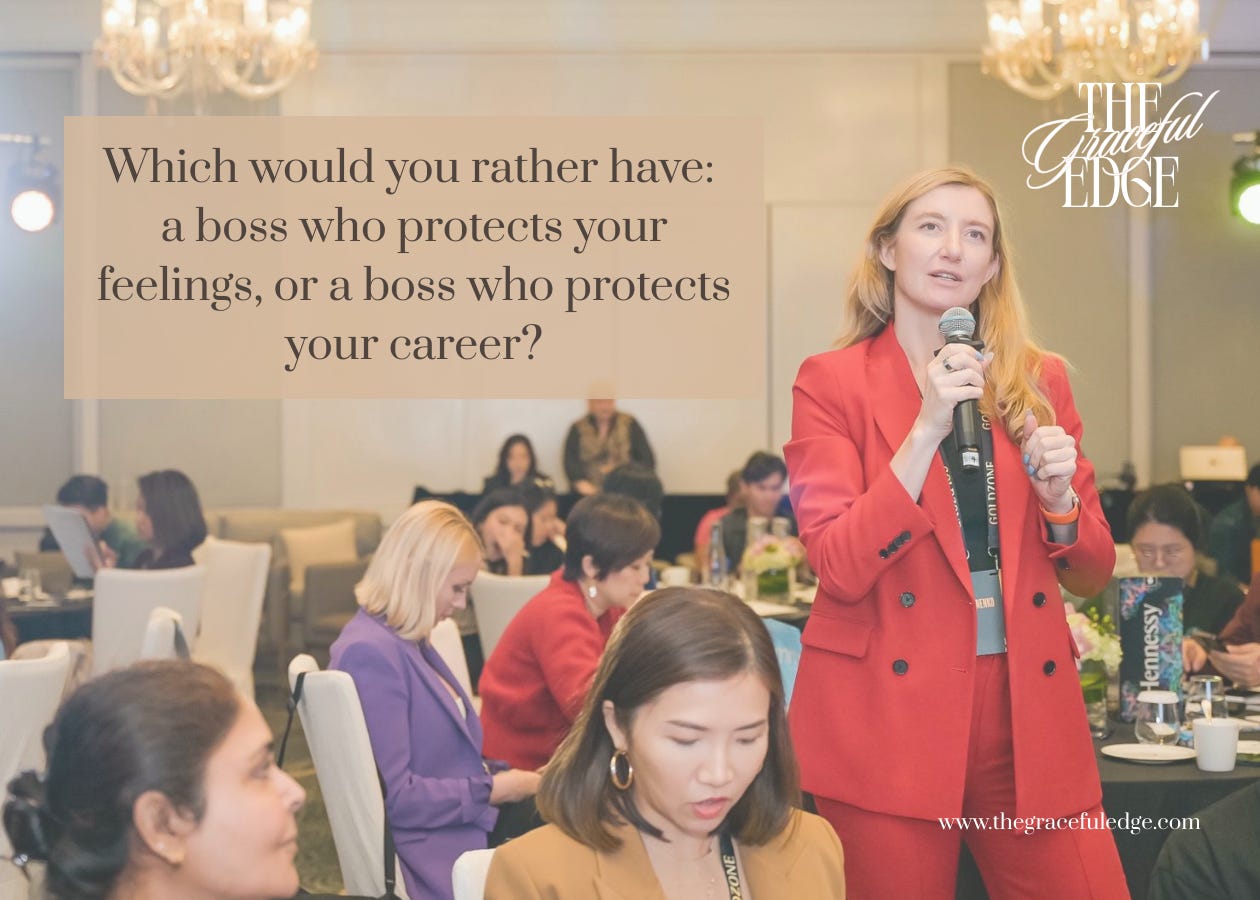
Which would you rather have: a boss who protects your feelings, or a boss who protects your career?
Protecting feelings means postponing hard conversations and leaving blind spots unaddressed. Protecting a career means being clear early, even when it’s uncomfortable. It means letting people sit with disappointment long enough to learn from it.
We talk about psychological safety a lot, but we often mistake it for “comfort.” Real safety is the ability to look at the parts of ourselves we don’t want to see, our blind spots, and knowing the environment is stable enough to hold that truth. Addressing those spots has an exponential impact on growth, but it requires a leader who is willing to be temporarily “disliked” to deliver the gift of feedback.
The Adlerian Breakthrough
Reading The Courage to Be Disliked during this cycle made my old patterns impossible to ignore. Adlerian psychology introduces the “separation of tasks.”
My task is to provide the most honest, supportive, and clear feedback possible. Whether the other person likes me for it? That is their task, not mine.
When we confuse these tasks, we stop being leaders and start being “caretakers.” This surfaced clearly in our team’s recent engagement pulse survey. We saw themes of needing better prioritization and communication. In many ways, those aren’t process problems. They are symptoms of a “niceness” culture where no one wants to create the friction required to say “No” or “This isn’t good enough.”
Redistributing the Tension
Leadership, at a certain level, stops being about minimizing emotional reactions. It becomes about placing them where they belong.
Being liked often comes from absorbing tension.
Being respected comes from redistributing it.
Respect grows when people trust that feedback is honest, standards are consistent, and decisions are not negotiated through emotion. It doesn’t mean warmth and kindness disappear, it means care takes a more honest form.
Now, when I deliver feedback, I still feel the impulse to “manage the room” and make sure everyone leaves feeling okay. But I’ve learned to pause and ask:
Am I carrying this discomfort because it’s truly mine or because I don’t trust others to carry their own?
The leaders I admire most are not the ones everyone likes all the time. They are the ones who are steady enough to allow tension without flinching, present enough to listen without judging, and clear enough to deliver the truth to support developmental work.
That, to me, is the graceful edge.
A Reflection Moment:
If your team describes you as “so nice,” but never as “clear” or “fair,” is that actually a compliment? Or are you holding onto an emotional load that belongs to someone else’s growth?
If you found these insights valuable, please share this article with your network.
For more strategies on growth, leadership, and innovation, subscribe to my weekly letter, The Graceful Edge, where ambitious leaders gain a competitive advantage.
Thoughtful and sensible post. I have been on the other side of the feedback and often confused it with empathy. Your post opened my eyes about separation of tasks. It benefits both parties when feedback is honest. Thank you for sharing, Elena!
Lovely…!!!
It was a very nice conversation with you on this subject Elena…